Salinas, CA — In the Salinas Valley and Monterey, California, John Steinbeck’s name will appear almost everywhere. This includes a shopping center, restaurant menus, gift shops, a real estate company, even a jewelry store. The author of 27 books and numerous short stories and news articles, Steinbeck is arguably the area’s most famous native. This Central California region gave birth to many of Steinbeck’s stories and characters, but his works are loved by readers throughout the world. Many of his books have been turned into stage plays, television specials and movies.
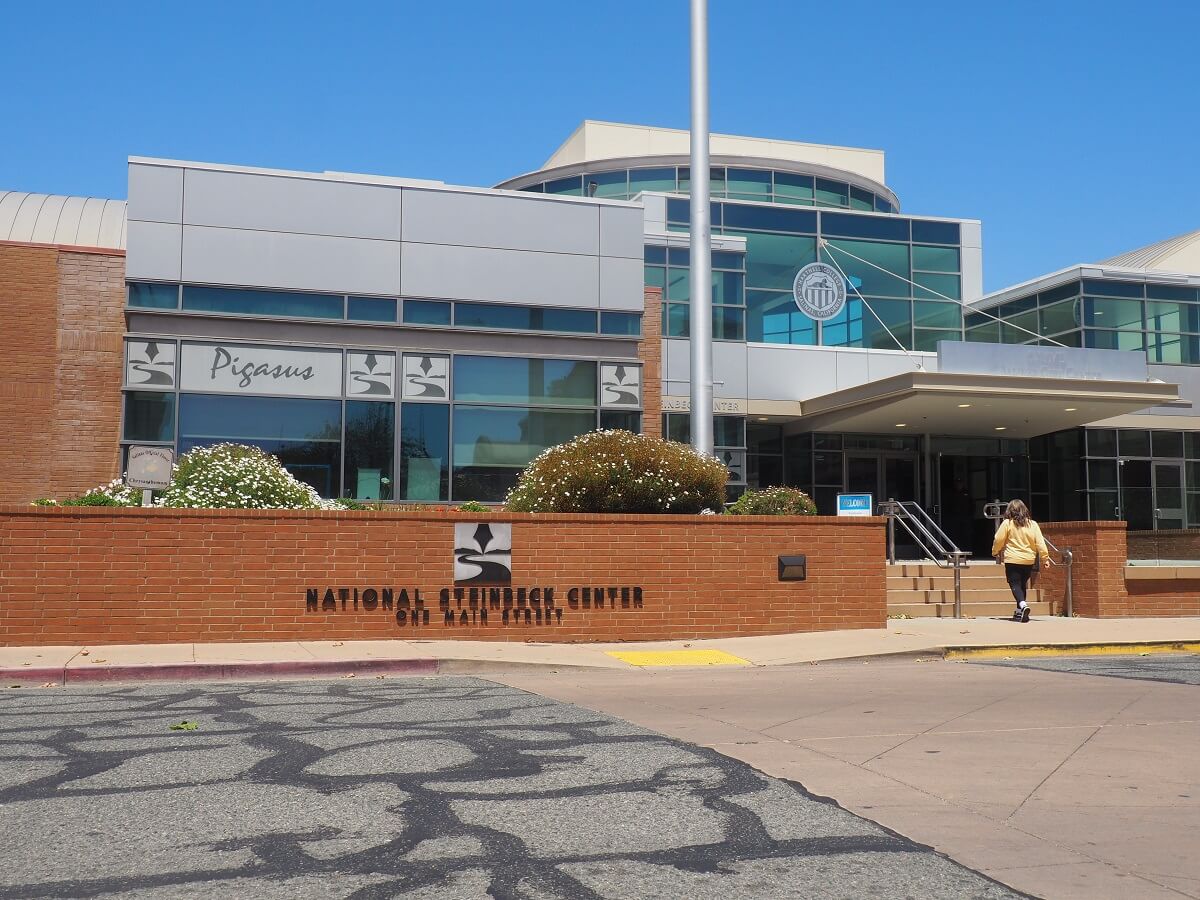
The National Steinbeck Center, Salinas, California.
The best place to learn more about John Steinbeck is at the National Steinbeck Center in Salinas. Through the museum’s interactive exhibits visitors can learn about Steinbeck’s colorful life and what inspired his works like, Of Mice and Men, The Grapes of Wrath, East of Eden and Cannery Row. https://steinbeck.org/
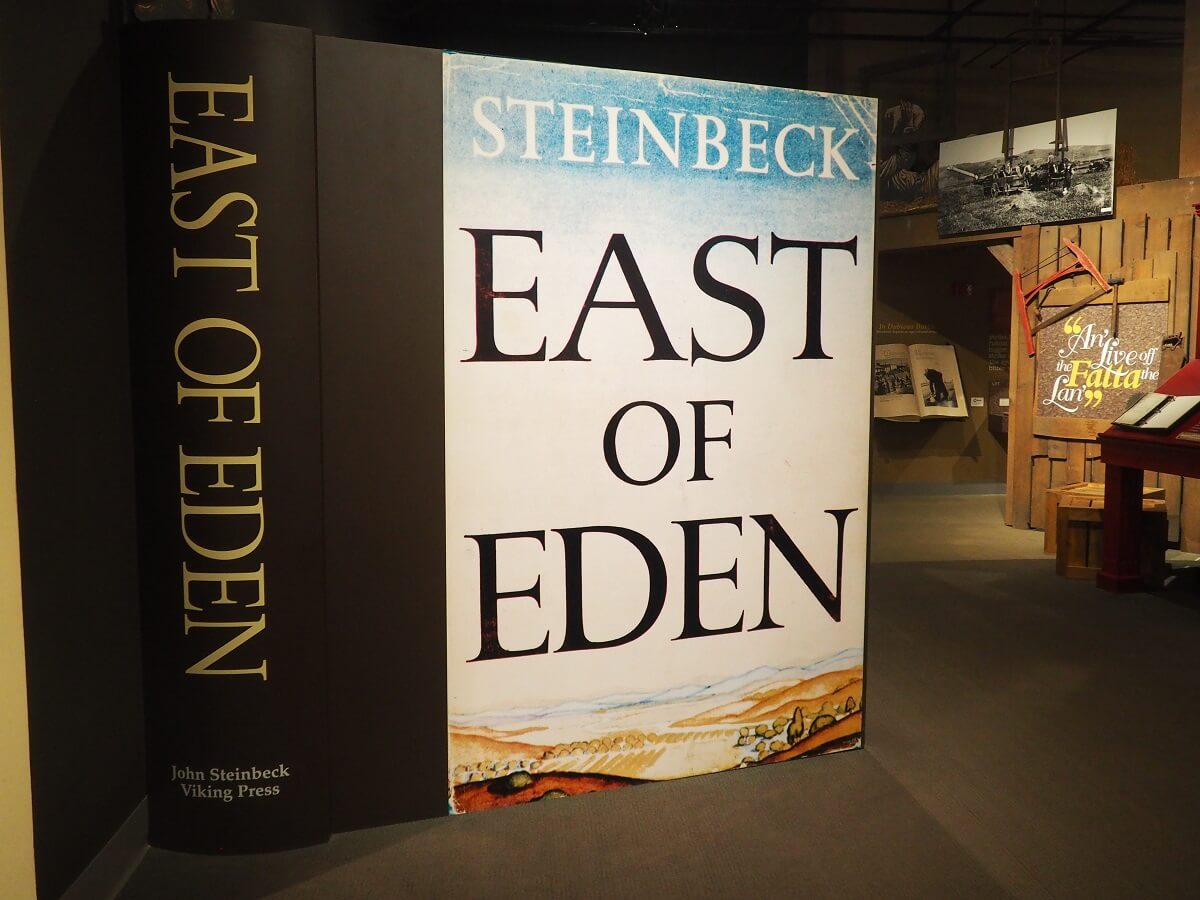
East of Eden exhibit.
East of Eden was inspired by Steinbeck’s own family. It is the retelling of the biblical story of Cain and Abel. James Dean starred in 1955 film version. ABC produced an eight hour mini series in 1991, starring Jane Seymour and Timothy Bottoms. Netflix is releasing a new mini series, starring British actress Florence Pugh scheduled for release in the fall of 2026.
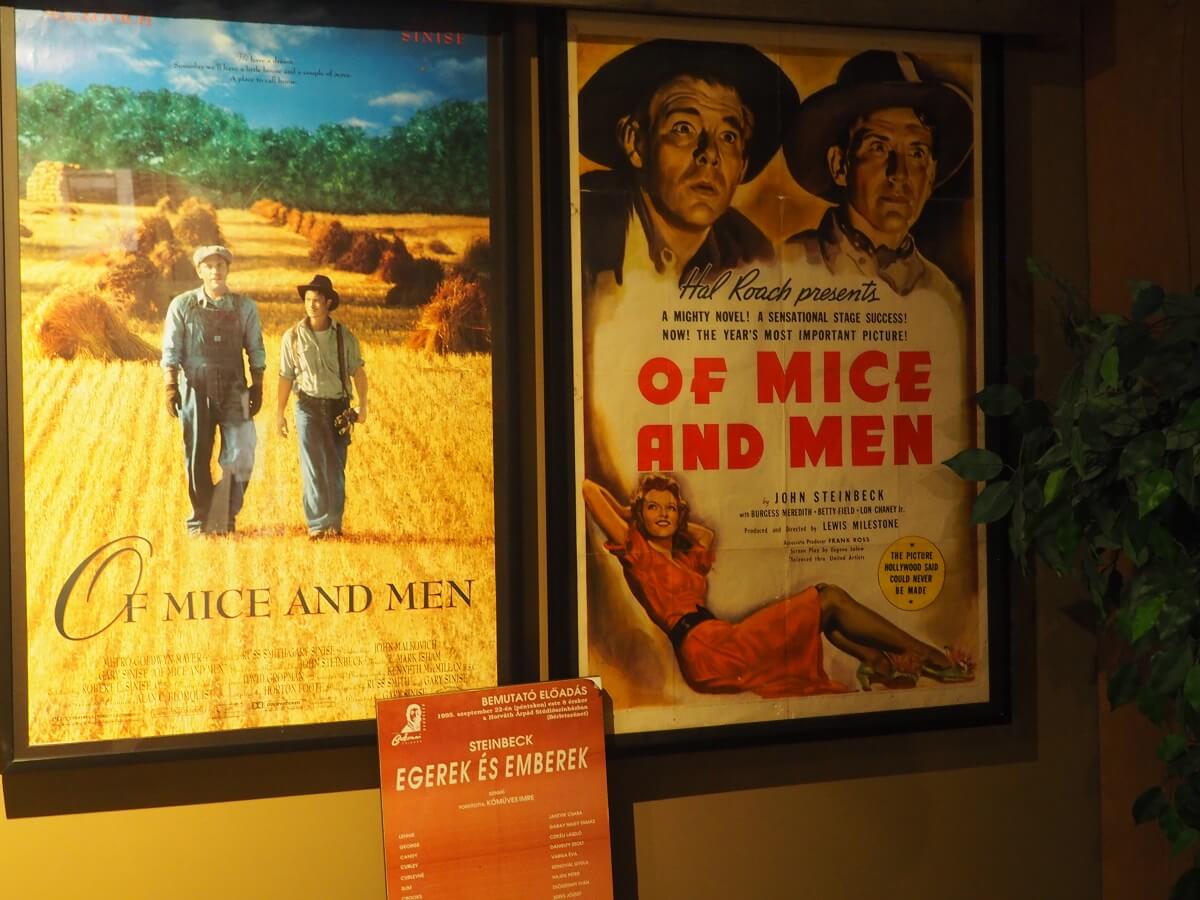
Of Mice and Men exhibit.
Of Mice and Men has been made into stage plays, television shows and movies. The most recent being the 1992 film version, starring Gary Sinise and John Malkovich.
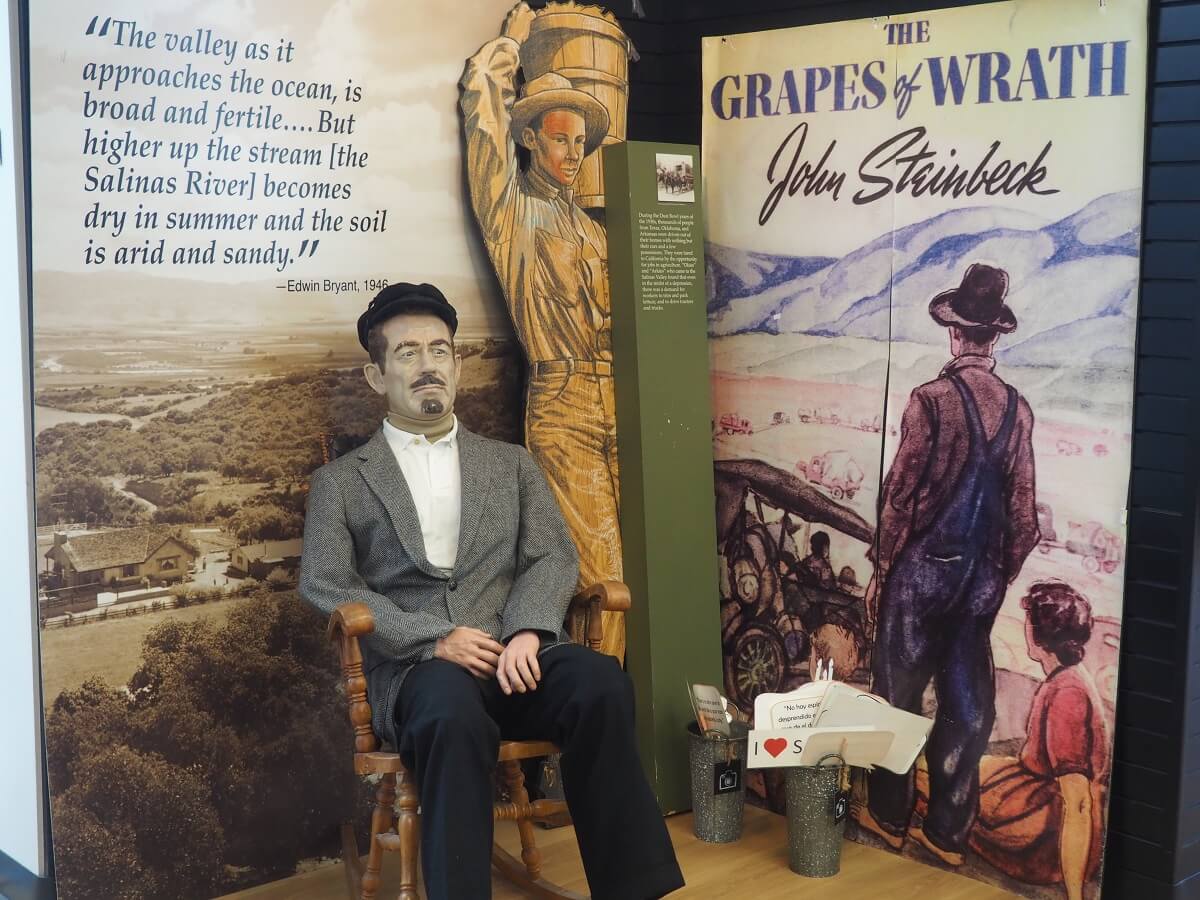
The Grapes of Wrath Exhibit.
During the Great Depression in the 1930s, nearly 500,000 migrants came to California escaping poverty and the dust bowl. They came from Oklahoma, Arkansas and the midwest looking for work. Unemployment was high. The migrants were exploited as cheap labor. They worked picking lettuce and other crops. Steinbeck toured the migrant camps and interviewed the workers doing a series of articles for a San Francisco newspaper. Inspired by the interviews, Steinbeck wrote The Grapes of Wrath in 1939. He completed what many consider his best work in only six months and by the end was physically exhausted. The book became a best seller and won the Pulitzer Prize. The Grapes of Wrath follows the Joads as they travel from Oklahoma to California facing poverty, dislocation, hunger and hatred. The 1940 movie based on the novel and directed by John Ford, made Henry Fonda a star. However, not everyone was pleased with Steinbeck’s work. Growers said it misrepresented them. Calling it, “Red Propaganda.” Then FBI Director, J. Edgar Hoover called Steinbeck, “Dangerous and subversive,” and it was a crime to possess the book in Nazi occupied Germany. Steinbeck received death threats and in some communities his books were banned and burned.
Steinbeck’s books banned even today.
In some parts of the country, Steinbeck’s books are still being banned, but they have inspired other artists, including the late songwriter Woody Guthrie and more recently Bruce Springsteen.
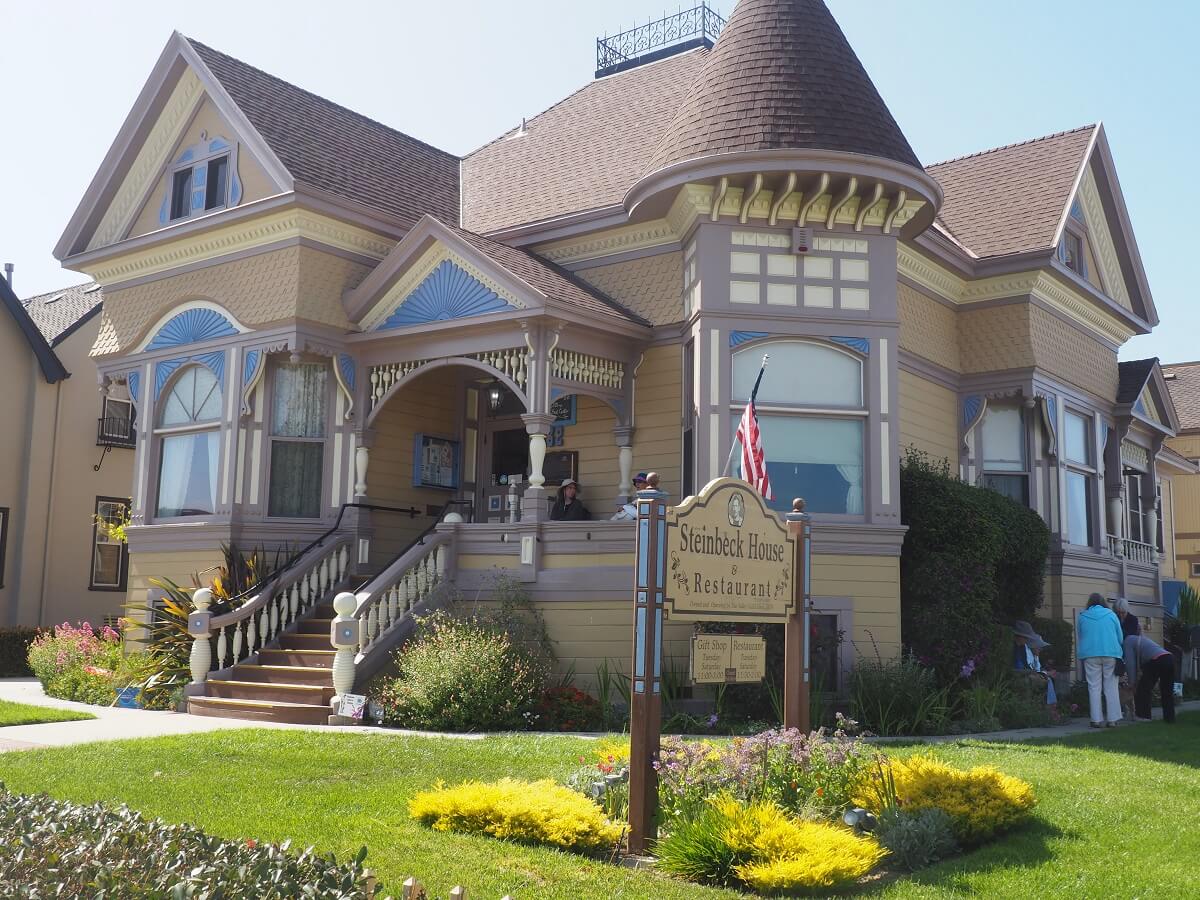
The Steinbeck House, a historic Queen Ann Victorian built in 1897.
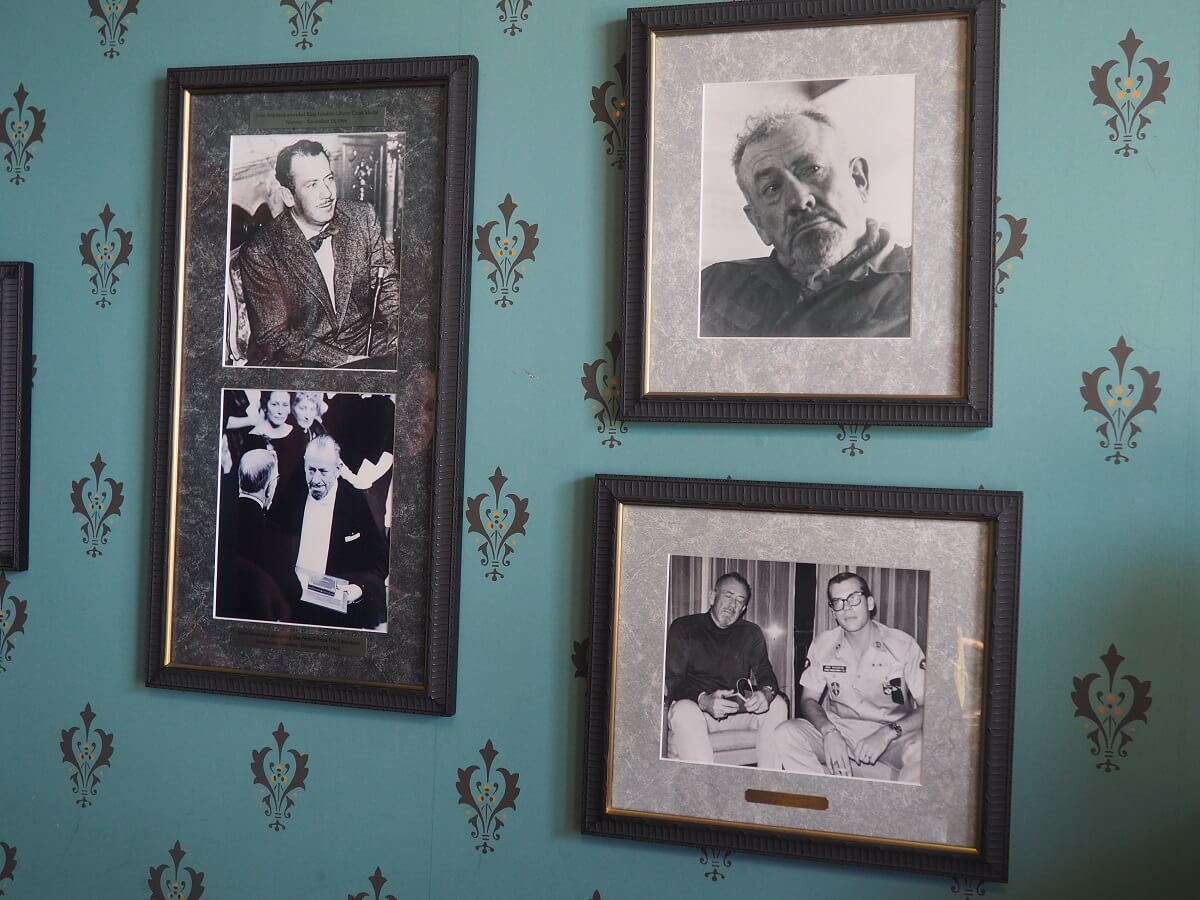
Two blocks away from the National Steinbeck Center is John Steinbeck’s boyhood home. The home is listed on the National Register of Historic Places and currently run by members of the Valley Guild. It features photos and memorabilia from the Steinbeck family. The home is also a restaurant featuring fresh produce from the Salinas Valley and a gift shop. Tours of the house are also available. For information: https://steinbeckhouse.com/
Photos of John Steinbeck in the Steinbeck House.
In the early 1900s people came from all over the world to work in Monterey’s sardine industry. Fishing boats set out at night and came back full of fish. Whistles called workers to work. There were 20 canneries on Ocean View Avenue. Workers caught, cleaned and canned the fish. Some of the sardines were ground into fertilizer for agricultural uses. Everything smelled of sardines.
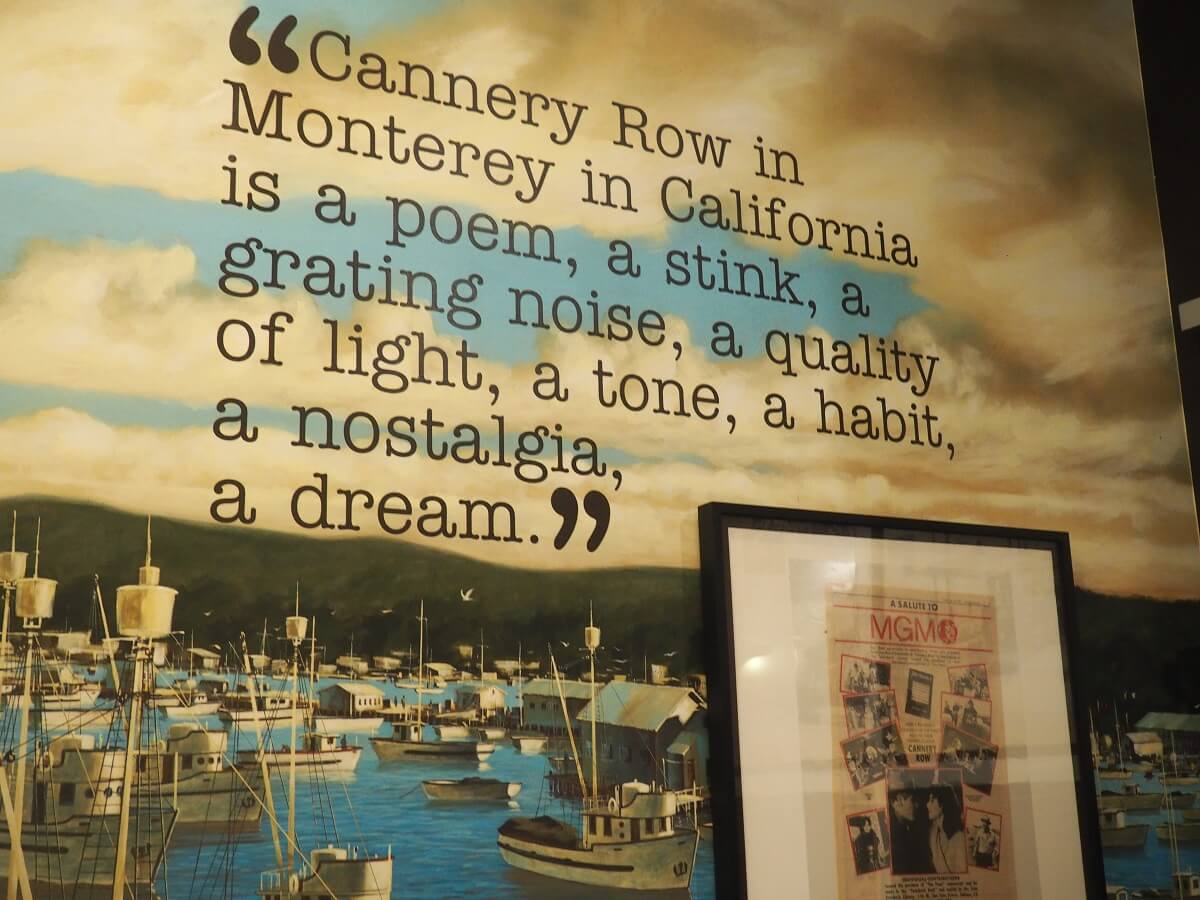
Cannery Row published 1945.
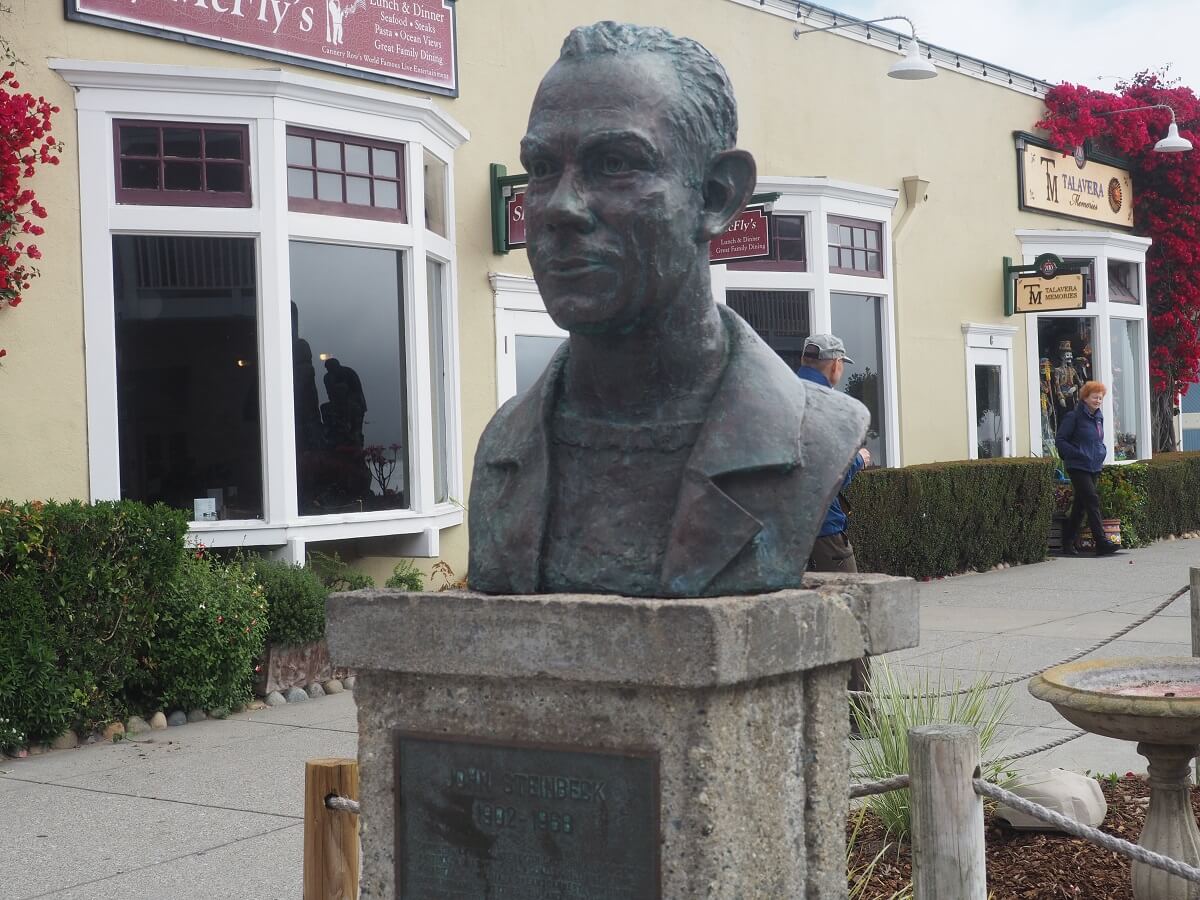
John Steinbeck’s novel Cannery Row perfectly captured the essence of Monterey in the 1930s and 40s.
“The whole street rumbles and groans and screams and rattles while the silver rivers of fishpour out of the boats and the boats rise higher and higher in the water until they are empty, ” from Cannery Row.
Remains of an old sardine cannery.
Called, “The Sardine Capitol of the World,” Monterey caught and processed 250,000 tons of sardines per year, but in 1945 the sardines disappeared. Overfishing and natural cycles were blamed for the disappearance of the sardines. Canneries went bankrupt and the area fell into disrepair. The last cannery closed in 1960.
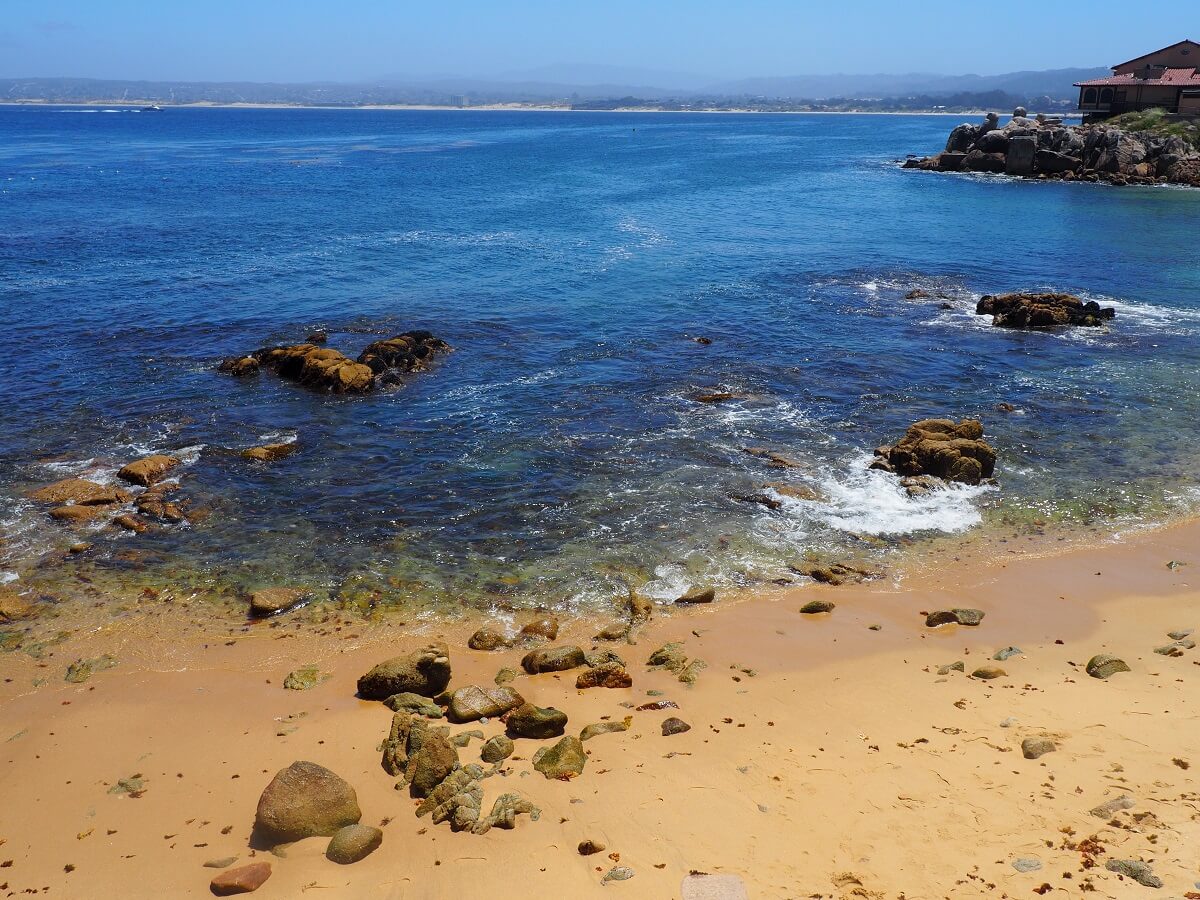
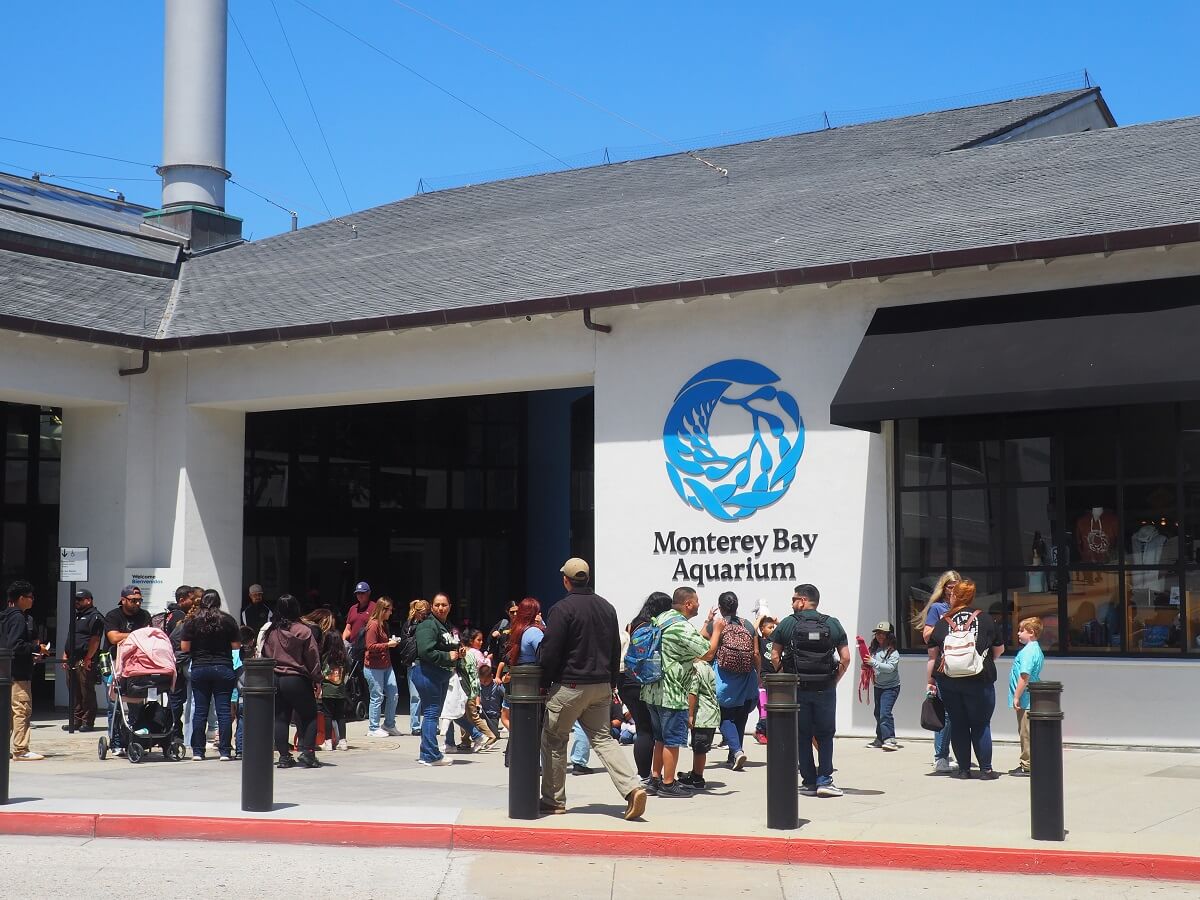
Today Monterey is the largest marine sanctuary in the world. The aquarium attracts visitors from all over the world. In 1958 the Monterey City Council voted to change the name of Ocean View Avenue to Cannery Row in honor of Steinbeck and his novel.Ed Ricketts and Steinbeck.
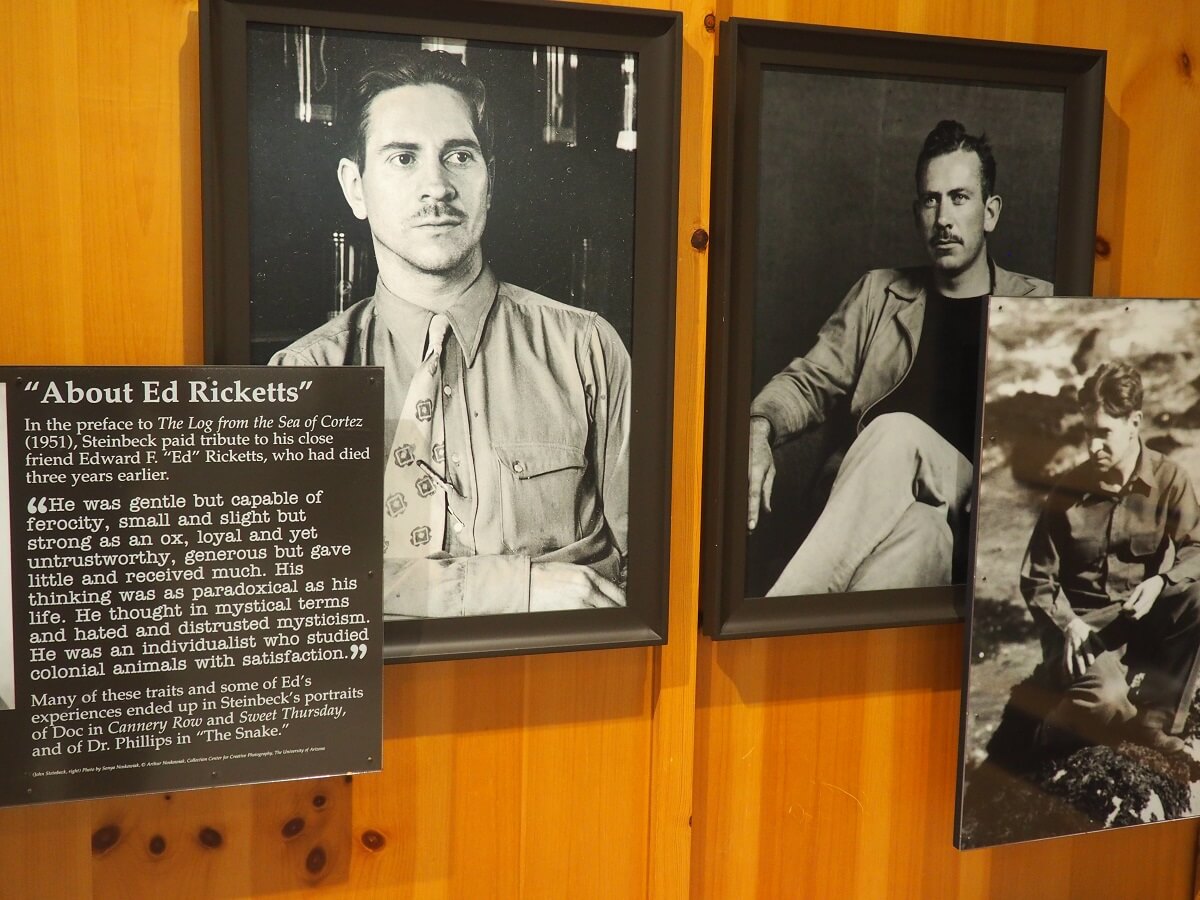
Ed Ricketts was the inspiration for the character, “Doc,” in the novels Cannery Row and Sweet Thursday. He was Steinbeck’s best friend. Ricketts was a marine biologist who collected plant and animal species and sold them to schools and laboratories around the world. Ricketts tragically died in an accident in 1948. A 1982 film, Cannery Row, adapted from Steinbeck’s novels Cannery Row and Sweet Thursday, starred Debra Winger and Nick Nolte as “Doc.”
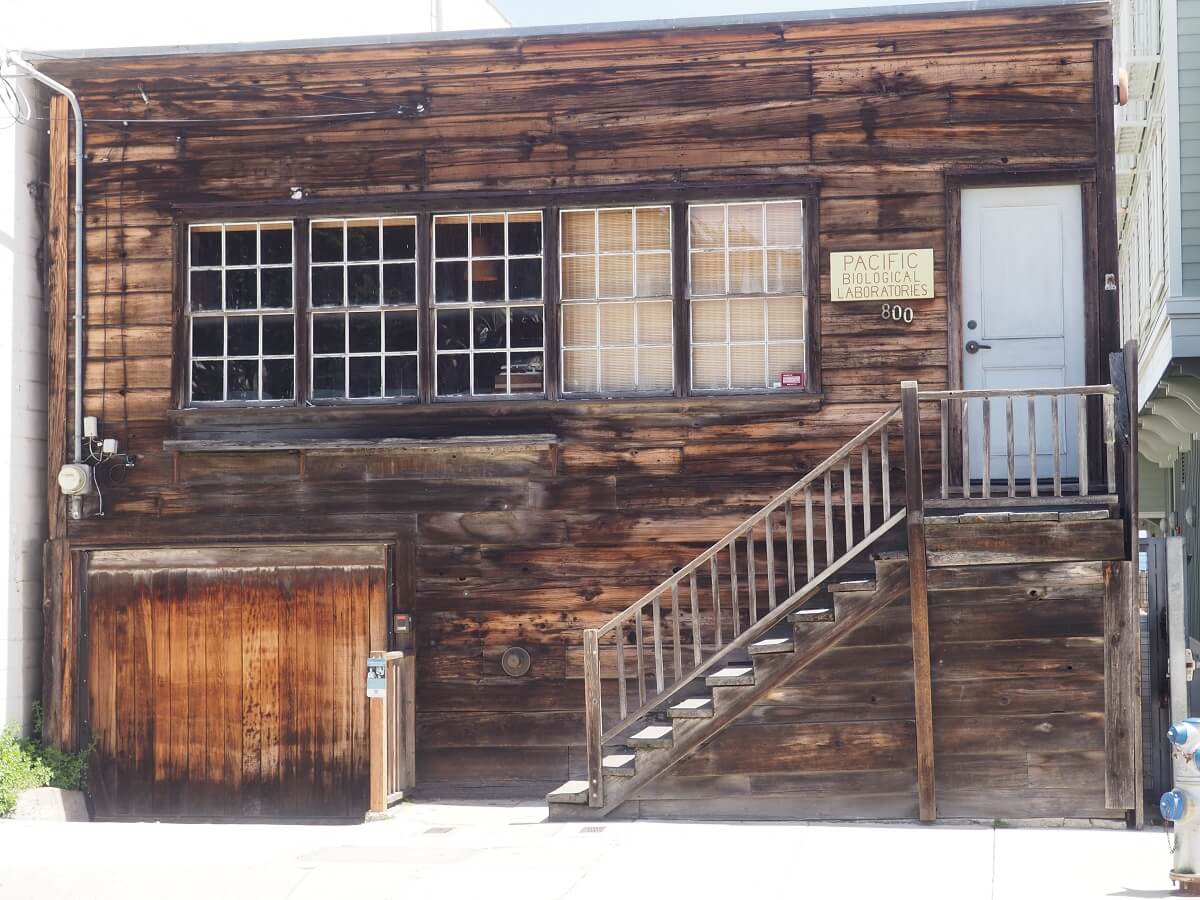
Ricketts former laboratory on Cannery Row.
Throughout his life, Steinbeck was a traveler. According to his wife Elaine, he was shy, but loved talking to small groups and people throughout the world. In 1960 in poor health and feeling out of touch with his own country, Steinbeck took a 10,000 mile journey around the country in a pick up truck and camper with Elaine’s poodle Charley. Hoping to recover creative impulses, he feared he had lost, he collected impressions and stories for a non fiction book, Travels with Charley: In Search of America, published in 1962.
“Rocinante,” named after Don Quixote’s horse. The actual truck Steinbeck drove while gathering material for Travels with Charley.
“A journey is a person in itself; no two are alike. We find after years of struggle that we do not take a trip; a trip takes us,” John Steinbeck.
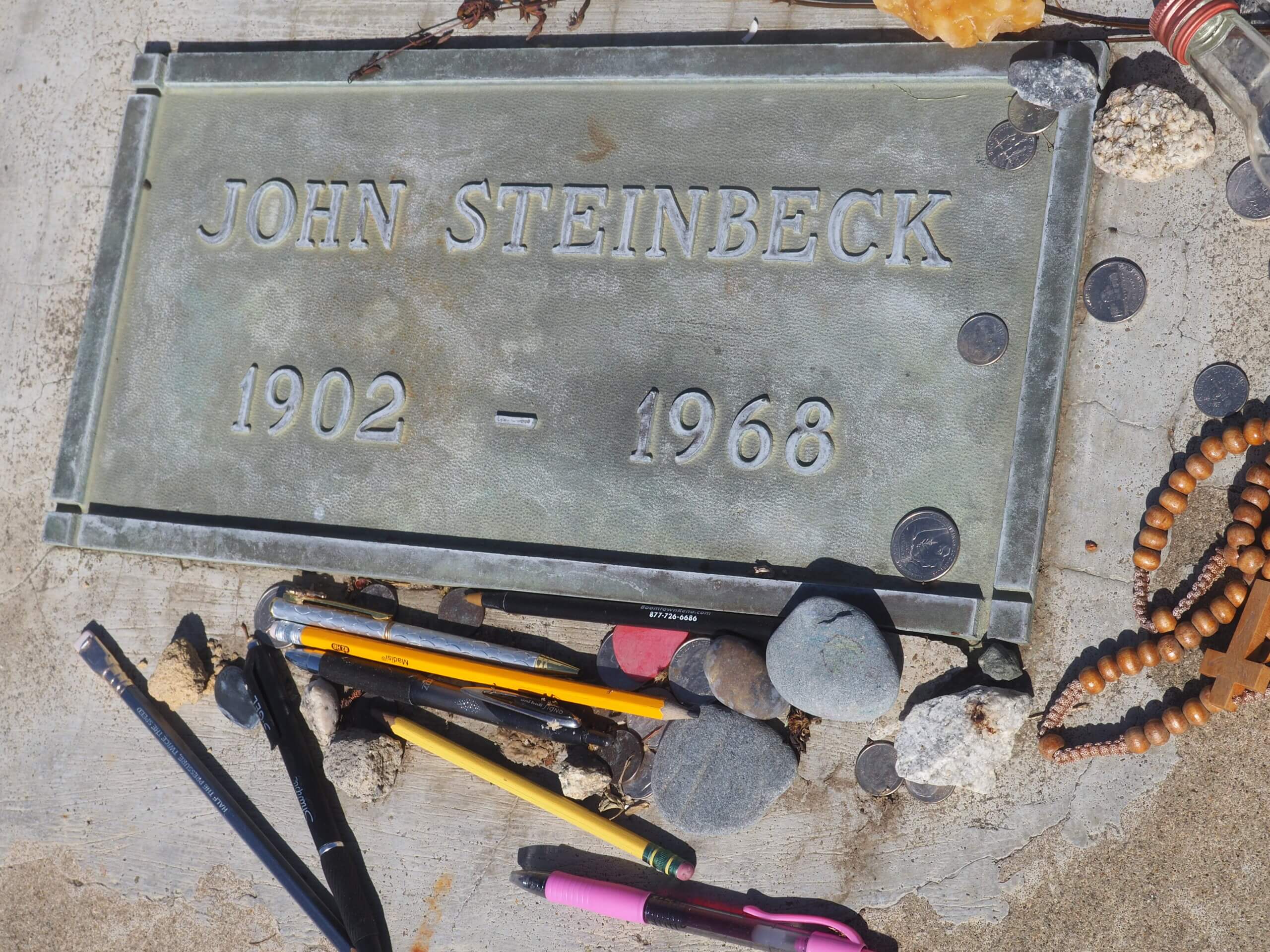
Steinbeck’s grave, Salinas, CA.
John Steinbeck died in New York in 1968. His ashes are buried in the Garden of Memories Cemetery in Salinas. His his books are published in several languages and continue to be loved throughout the world. While Salinas and Monterey continue to thrive on his legacy and fame, his relationship with the area was complicated. During his lifetime, he was considered a rebel and a misfit by conservative members of the area. The fact that his books are still being banned in some parts of the country today, means that his voice remains relevant.



0 Comments